Tidal Pool #3
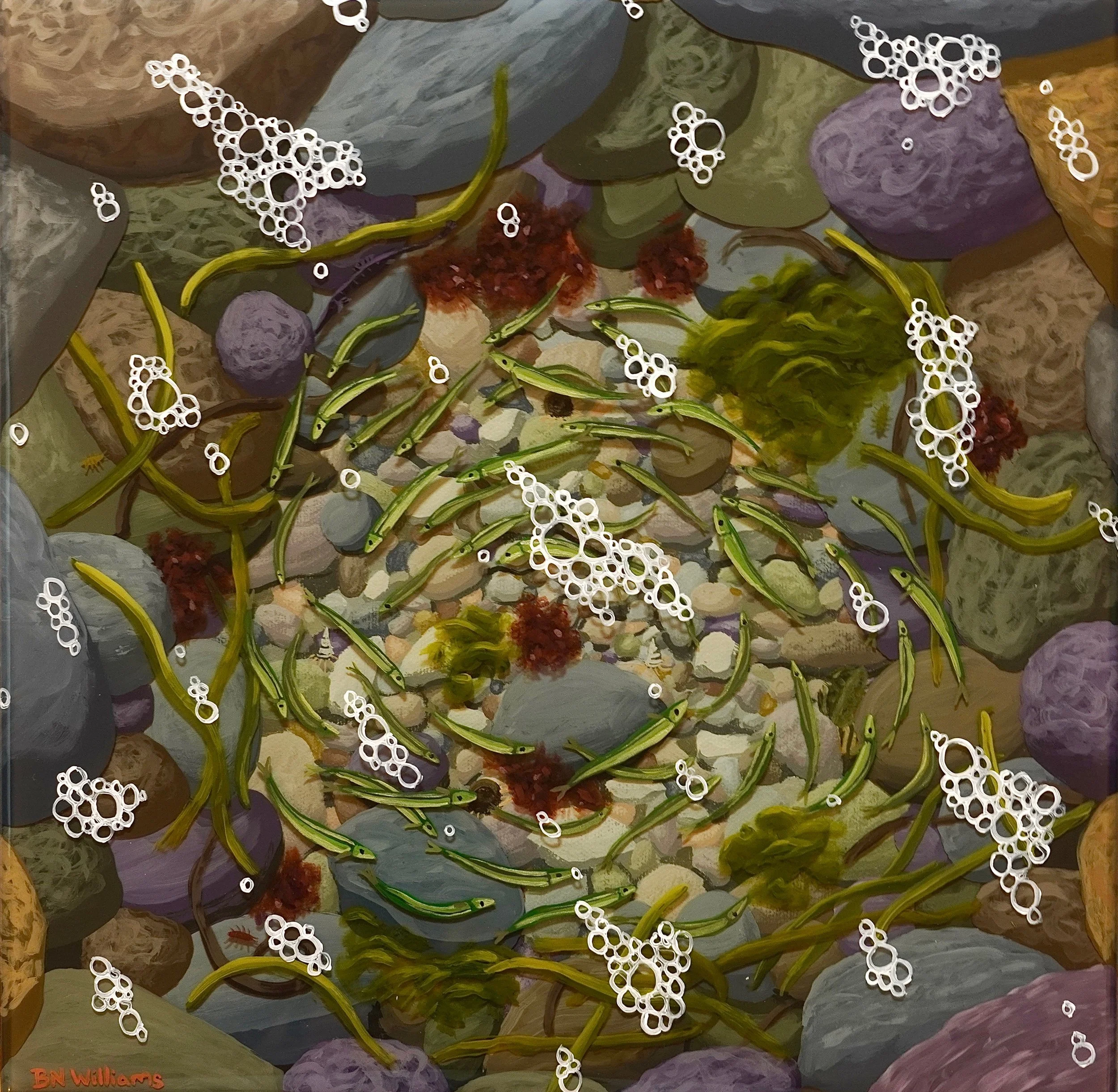
Tidal Pool #3
Acrylic and Epoxy on canvas
Tidal pools are small seawater habitats left on rocky shores at low tide. They change with the tide, weather, and time of day, and can vary rapidly in temperature, salinity, and oxygen. Organisms there are adapted to both submerged and partially exposed conditions.
These pools concentrate high biodiversity — starfish, anemones, crabs, small fish, snails, limpets, barnacles, sea urchins, and various algae often coexist within arm’s reach. Many species cling or suction to rocks (limpets, barnacles, sea stars). Some tolerate wide salt fluctuations; others close up to retain moisture and survive low tide. Algae and photosynthetic microbes produce oxygen and food, and pools can act as nurseries for juvenile fish and crustaceans sheltered by algae and crevices. Microclimates matter: south-facing pools in the Northern Hemisphere are warmer and may host different species than shaded pools.
Human impacts are immediate — trampling, collecting, pollution, and development rapidly alter these communities. Responsible tidepooling means look but don’t remove animals or algae, and step carefully.