Summer Flounder
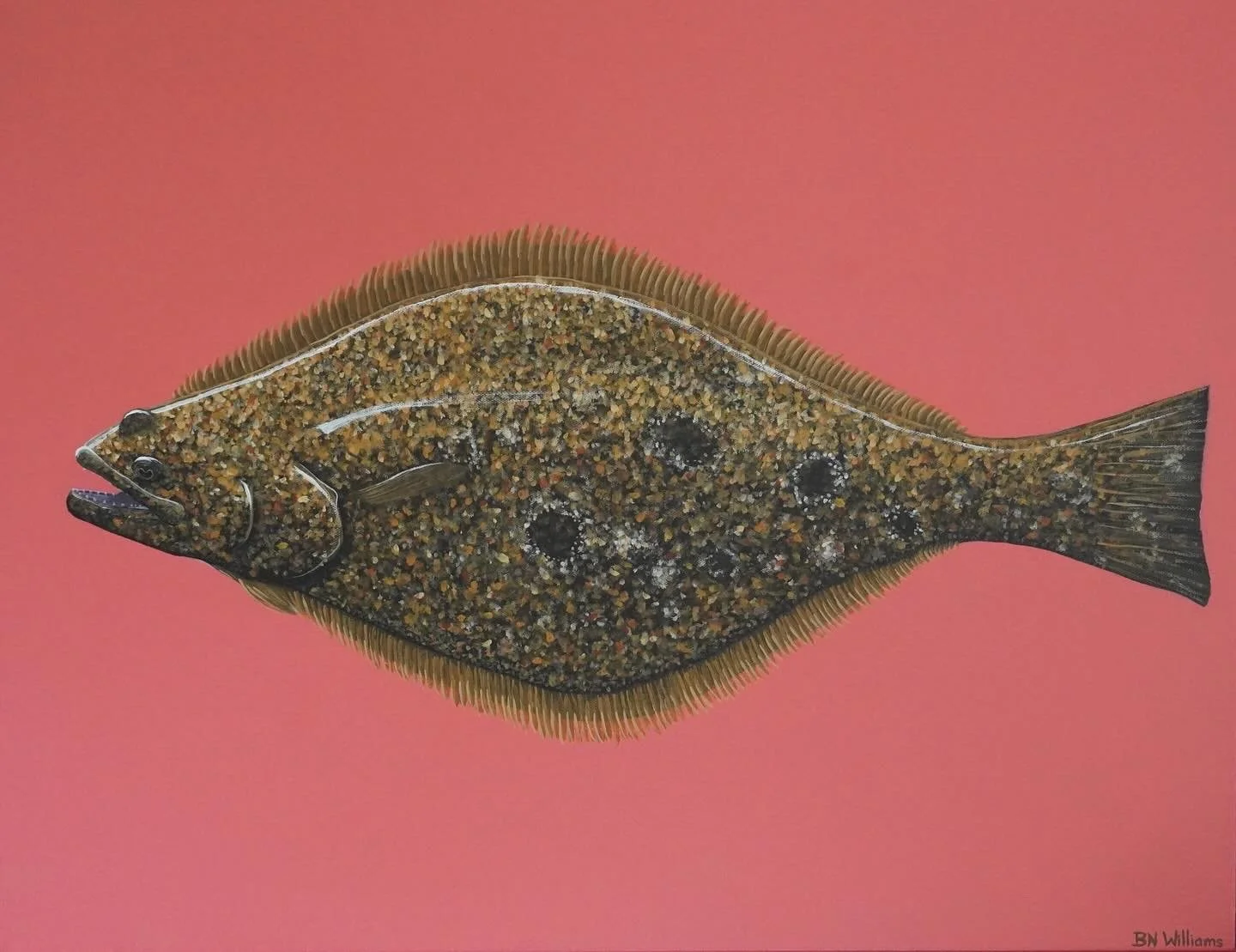
Summer Flounder
Acrylic on canvas 24'“ X 30”
Summer flounder (Paralichthys dentatus), aka fluke, is a right-eyed flatfish of the U.S. Atlantic coast. Juveniles swim upright; during metamorphosis both eyes migrate to the right. Color and pattern shift to match the seabed for camouflage. Adults are usually 12–24 inches, sometimes up to 30 inches and over 10 lb. They ambush prey—fish (menhaden, herring, sand lance), squid, crustaceans—partially burying in sand or mud with only eyes and mouth exposed. Spawning occurs offshore late spring–summer; females produce hundreds of thousands to over a million eggs. Larvae are pelagic at first; eye migration and benthic habits develop with growth. Growth rates rise with warmer water and abundant food. They feed actively near tidal rips and inlets, tolerate varied salinities, and frequent estuaries, bays, and coastal waters in summer. Fisheries are important in the Mid-Atlantic and Northeast; management uses size and bag limits and mixed-stock approaches. A lateral line detects vibrations to find buried prey.